
AI helps SaaS businesses streamline internal operations by automating workflows, reducing manual processes, improving decision-making, and connecting tools across teams. It enables faster execution, better visibility, and scalable operations without increasing headcount. Rather than replacing operations teams, AI acts as a force multiplier that coordinates cross-functional work, surfaces insights from fragmented data, and eliminates repetitive administrative tasks that slow teams down.
The shift toward AI-driven operations isn’t about adopting bleeding-edge technology for its own sake. It’s a response to real operational challenges: tool sprawl, coordination overhead, data silos, and the growing complexity of scaling SaaS businesses in distributed environments. This guide breaks down how AI impacts internal SaaS operations, where it delivers measurable outcomes, and how teams can adopt it without overcommitting resources or disrupting existing workflows.
What Does “Internal Operations” Mean in SaaS?
Internal operations refer to the cross-functional workflows that keep a SaaS business running behind the scenes. Unlike customer-facing features or marketing campaigns, these are the processes that connect teams, move information between systems, and enable execution at scale.
Product Operations involves managing feature requests, coordinating releases, tracking bugs, and maintaining documentation. Teams handle prioritization backlogs, coordinate engineering sprints, manage technical debt, and ensure product development aligns with business goals.
Customer Operations covers onboarding workflows, usage monitoring, expansion tracking, and customer health scoring. Operations teams build processes that flag at-risk accounts, trigger renewal sequences, and coordinate handoffs between sales, support, and success functions.
Support Operations includes ticket routing, response time monitoring, knowledge base management, and escalation workflows. Support ops teams standardize how issues are categorized, assigned, resolved, and analyzed to improve efficiency and customer satisfaction.
Finance Operations encompasses billing automation, revenue recognition, subscription management, payment processing, and financial reporting. Finance ops ensures accurate invoicing, handles payment failures, tracks revenue metrics, and maintains compliance across different billing models.
Revenue Operations (RevOps) connects sales, marketing, and customer success data to improve pipeline visibility, forecast accuracy, deal tracking, and attribution modeling. RevOps teams unify CRM data, standardize definitions, and create workflows that improve conversion rates and reduce revenue leakage.
Engineering Workflows involve CI/CD pipelines, incident response, on-call rotations, deployment tracking, and infrastructure monitoring. Engineering operations ensure development velocity doesn’t compromise stability or security.
These functions often operate in separate systems with minimal automation connecting them. That’s where operational friction accumulates and where AI makes its biggest impact.
Why SaaS Companies Are Adopting AI for Operations
SaaS companies face a unique operational complexity that grows exponentially with scale. The drivers pushing teams toward AI-powered operations are consistent across early-stage startups and established platforms.
Tool Sprawl Creates Coordination Overhead
The average SaaS company uses dozens of tools across departments. Sales operates in Salesforce or HubSpot. Support lives in Zendesk or Intercom. Engineering coordinates through Jira and GitHub. Finance tracks subscriptions in Stripe or Chargebee. Marketing manages campaigns in separate platforms.
Each tool holds critical information, but moving data between them requires manual work: copying information from Slack into tickets, updating CRM records after calls, syncing product feedback into roadmap tools, or generating reports by pulling data from multiple dashboards. This “swivel chair” work consumes hours daily and introduces errors.
Manual Coordination Doesn’t Scale
As SaaS teams grow, coordination becomes a bottleneck. Someone needs to triage support tickets, assign engineering tasks based on priority, update stakeholders on deal progress, flag churn risks, and ensure nothing falls through the cracks.
Without automation, this coordination falls on operations people who spend their days in Slack threads, status meetings, and spreadsheets. AI removes this bottleneck by handling routing, prioritization, and status updates automatically.
Scaling Challenges Compound Without Operational Leverage
SaaS growth creates operational pressure. More customers mean more support volume, more product complexity, more data to analyze, and more cross-functional dependencies. Traditional solutions involve hiring more operations staff, but that approach has limits. Teams become harder to coordinate, information silos deepen, and operational costs rise linearly with growth.
AI provides operational leverage by automating repetitive work and coordinating workflows without adding headcount. A single AI-powered workflow can replace dozens of manual handoffs, allowing smaller teams to support larger customer bases and more complex operations.
Remote and Distributed Teams Increase Coordination Costs
Distributed SaaS teams don’t have the benefit of walking over to a colleague’s desk to resolve issues. Instead, they rely on asynchronous communication through Slack, email, and project management tools. This creates lag in decision-making and makes it harder to surface the right information at the right time.
AI helps by proactively surfacing relevant context, routing requests to available team members across time zones, and summarizing conversations so people can catch up quickly without reading entire threads.
Data Fragmentation Hides Operational Insights
SaaS companies generate massive amounts of operational data, but it’s scattered across systems. Customer usage data sits in the product analytics tool. Support interactions are logged in the ticketing system. Sales activities live in the CRM. Financial metrics are tracked in billing software.
Making sense of this data requires pulling reports from each system and manually correlating patterns. AI unifies these data sources, surfaces insights automatically, and flags issues before they become critical problems.
Where AI Impacts Internal SaaS Operations the Most
AI doesn’t transform operations uniformly. Its impact concentrates in specific workflows where automation, coordination, and insight generation deliver measurable value.
Workflow Automation
Workflow automation is the most immediate application of AI in SaaS operations. Instead of manually triggering actions based on events, AI recognizes patterns and executes multi-step processes automatically.
When a high-value customer submits a support ticket, AI can detect urgency from language patterns, route it to a senior agent, pull relevant account history, and notify the customer success manager simultaneously. When a sales deal reaches a certain stage, AI can generate proposal drafts, schedule follow-up tasks, and update forecasts without manual input.
These workflows eliminate repetitive tasks and ensure consistency. Every high-priority ticket gets the same treatment. Every deal progression follows the same process. Human effort shifts from executing workflows to designing and refining them.
Customer Support Operations
Support operations benefit significantly from AI because of the high volume and repetitive nature of many requests. AI-powered tools automatically categorize incoming tickets, detect sentiment to flag frustrated customers, route issues based on expertise and availability, and suggest responses based on historical resolutions.
For SaaS companies handling thousands of support interactions monthly, this automation reduces response times and ensures nothing gets missed. Support teams focus on complex issues that require human judgment while AI handles routine inquiries and administrative tasks.
AI also improves knowledge management by identifying gaps in documentation when agents repeatedly answer the same questions manually. It can generate draft help articles based on resolution patterns, keeping documentation current without dedicated writing resources.
Product and Engineering Coordination
Product and engineering teams deal with constant coordination overhead: prioritizing feature requests, tracking bug reports, managing technical debt, coordinating releases, and keeping stakeholders informed.
AI streamlines this by automatically triaging incoming feedback, detecting duplicate requests, categorizing issues by theme, and surfacing patterns that indicate emerging problems. When multiple customers report similar issues, AI flags the trend before it requires manual analysis.
Engineering workflows benefit from AI-powered incident response that detects anomalies, routes alerts to on-call engineers, pulls relevant logs, and suggests troubleshooting steps based on past incidents. This reduces mean time to resolution and helps teams learn from previous issues.
Revenue and Finance Operations
Revenue operations teams use AI to improve pipeline management, forecast accuracy, and deal velocity. AI scores leads based on engagement signals, predicts which deals are likely to close, identifies at-risk opportunities, and suggests next actions based on successful deal patterns.
Finance operations benefit from automated invoice generation, payment failure handling, revenue recognition workflows, and financial reporting. AI detects billing anomalies, flags potential churn signals in payment behavior, and ensures compliance across different subscription models and geographies.
The combination improves both top-line revenue (by helping sales close more deals) and bottom-line efficiency (by reducing manual finance work and preventing revenue leakage).
How AI Streamlines SaaS Workflows
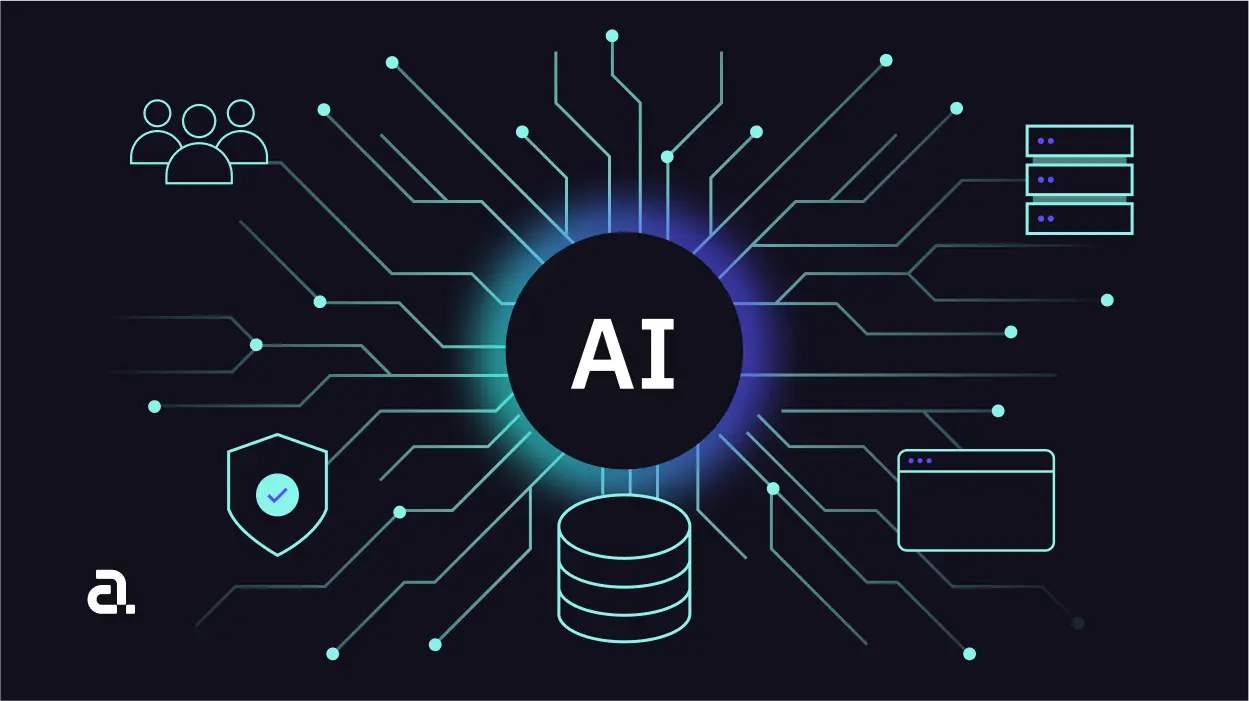
Understanding the mechanisms behind AI-driven workflow automation helps teams identify where it can create value in their specific operations.
Trigger-Based Automation with Contextual Intelligence
Traditional automation follows if-then rules: if X happens, do Y. AI-powered automation adds contextual understanding. It doesn’t just detect that a support ticket arrived; it understands the urgency, complexity, and customer importance. It doesn’t just log a sales call; it extracts key discussion points, identifies concerns, and suggests follow-up actions.
This contextual intelligence allows workflows to branch dynamically based on nuanced signals rather than simple triggers.
Cross-Tool Coordination Without Manual Integration Work
AI workflows can pull data from multiple systems, make decisions based on combined information, and take actions across platforms. A single workflow might monitor product usage data, check CRM records, analyze support history, and trigger personalized outreach based on the combined picture.
This eliminates the need for manual correlation and ensures actions are based on complete information rather than siloed data.
Proactive Insight Generation and Alerting
Rather than waiting for people to run reports and analyze data, AI continuously monitors operational metrics and surfaces anomalies. It detects when support volume spikes unusually, when a high-value account’s usage drops, when deal velocity slows, or when engineering incidents follow concerning patterns.
These proactive alerts allow teams to respond to issues before they escalate rather than discovering problems after they’ve caused damage.
Intelligent Task Assignment and Prioritization
AI can route work based on factors like skill match, current workload, past performance, time zone availability, and urgency. This ensures the right person handles each task without requiring a manager to manually distribute work.
For distributed teams, this capability is particularly valuable since it accounts for availability across time zones and prevents work from piling up in one region while others are underutilized.
Real Use Cases of AI in SaaS Internal Operations
Concrete examples illustrate how SaaS teams apply AI to solve specific operational problems.
Intelligent Ticket Routing and Prioritization
When support tickets arrive, AI categorizes them by type (billing issue, technical problem, feature request), detects urgency from language patterns, checks account value and history, and routes to the appropriate team member based on expertise and availability. High-value customers with urgent technical issues go directly to senior engineers. Billing questions go to the finance team. Routine requests get handled by AI-powered chatbots that resolve common issues instantly.
Automated Meeting Summaries and Action Item Tracking
After customer calls, internal meetings, or product discussions, AI generates summaries highlighting key decisions, action items, and next steps. These summaries get automatically posted to relevant Slack channels, logged in CRM records, or converted into Jira tickets. Teams stay aligned without requiring someone to take detailed notes or manually distribute meeting outcomes.
Context-Aware Task Creation and Assignment
When a customer mentions a feature request during a support conversation, AI automatically creates a product feedback ticket, links it to the customer account, tags it with relevant themes, and assigns it to the product team for review. When an engineering incident occurs, AI creates follow-up tasks for root cause analysis, documentation updates, and preventive measures.
Automated Onboarding Workflow Orchestration
New customer onboarding involves multiple teams: sales hands off to implementation, customer success schedules training, support prepares resources, and product tracks initial usage. AI orchestrates these handoffs by triggering tasks at appropriate milestones, notifying teams when their involvement is needed, tracking completion status, and flagging delays that might impact time-to-value.
Churn Risk Monitoring and Intervention Triggers
AI continuously monitors signals that indicate churn risk: declining product usage, missed payments, negative support interactions, lack of engagement with new features, or reduced collaboration from the customer’s team. When multiple risk signals align, AI automatically notifies the customer success manager, pulls relevant account history, and suggests intervention strategies based on what’s worked for similar customers.
Cross-System Reporting and Dashboard Automation
Instead of manually pulling data from multiple systems to create executive reports, AI generates dashboards that unify metrics from product analytics, CRM, support tools, and financial systems. These reports update in real time and include trend analysis, anomaly detection, and recommendations for areas requiring attention.
Benefits of AI-Driven Operations
The operational improvements from AI translate into measurable business outcomes that justify the investment.
Reduced Operational Cost and Improved Efficiency
AI eliminates repetitive manual work that consumes operational capacity. Tasks that previously required dedicated staff time—like ticket routing, status updates, report generation, and data entry—happen automatically. This allows teams to support more customers and handle more complexity without proportional increases in headcount.
Organizations report efficiency gains of 30-40% in areas where AI-powered automation replaces manual processes.
Improved Cross-Functional Alignment
AI-powered operations platforms create shared visibility across departments. Sales knows what support issues a prospect is experiencing. Product teams see which features drive expansion revenue. Customer success receives alerts about usage patterns that indicate risk or opportunity.
This alignment reduces miscommunication, prevents conflicting priorities, and ensures everyone works from the same understanding of customer health and business performance.
Reduced Manual Work and Human Error
Manual data entry, transcription, and copying information between systems introduces errors. AI eliminates these error-prone tasks by moving data automatically and maintaining consistency across systems. Billing errors decrease. Customer records stay accurate. Reports reflect current data rather than outdated snapshots.
Better Scalability Without Linear Cost Growth
Traditional operational scaling requires hiring more people as volume grows. AI changes this equation by handling increasing volumes without proportional resource increases. A support team that could manage 500 tickets monthly with manual routing might handle 2,000 tickets with AI-powered automation using the same headcount.
This operational leverage allows SaaS companies to grow revenue faster than operational costs, improving unit economics and profitability.
Challenges and Risks
AI-driven operations create value, but implementation comes with legitimate challenges that require thoughtful management.
Over-Automation and Loss of Human Judgment
Not every workflow should be automated. Some decisions require contextual understanding, empathy, or judgment that AI cannot replicate. Over-automation can lead to rigid processes that frustrate customers or miss important nuances.
The solution involves maintaining human oversight for high-stakes decisions while automating repetitive, low-risk tasks. AI should handle routing and suggest actions, but humans should retain control over final decisions in complex situations.
Data Privacy and Security Concerns
AI systems require access to operational data across multiple systems. This creates potential security vulnerabilities if not properly managed. Customer data, financial information, and proprietary business insights need protection.
SaaS companies must implement proper access controls, data encryption, audit logs, and compliance frameworks when deploying AI-powered operations tools. Choose vendors that meet SOC 2, GDPR, and relevant industry-specific compliance requirements.
Change Resistance from Teams
Operational teams may resist AI adoption if they perceive it as threatening their roles or disrupting established workflows. This resistance can derail implementation regardless of the technology’s capabilities.
Successful adoption requires clear communication about how AI augments rather than replaces human work. Involve operational teams in designing workflows, show concrete examples of eliminated drudgery, and demonstrate how AI frees them for higher-value activities.
Tool Fatigue and Integration Complexity
Adding another platform to an already complex tech stack can create more problems than it solves if the new tool doesn’t integrate smoothly with existing systems. Teams already struggle with tool sprawl; AI platforms that require learning new interfaces or manually moving data between systems won’t get adopted.
Prioritize AI solutions that integrate natively with your existing tools, work within platforms teams already use daily (like Slack or CRM systems), and minimize the learning curve required for adoption.
AI Reliability and Accuracy Concerns
AI systems make mistakes. They might misclassify tickets, miss important signals, or suggest incorrect actions. Deploying AI without monitoring its performance can lead to operational issues that damage customer relationships or business outcomes.
Implement proper monitoring, maintain human review for high-stakes decisions, track accuracy metrics, and create feedback loops that improve AI performance over time. Start with low-risk workflows and expand to more critical operations as the system proves reliable.
Tools Enabling AI-Driven Internal Operations
Different categories of tools address different aspects of AI-powered operations. Understanding the landscape helps teams choose appropriate solutions.
Workflow Automation Platforms
These platforms connect different tools and orchestrate multi-step processes across systems. They typically offer visual workflow builders, pre-built integrations, and AI capabilities for intelligent routing and decision-making. Examples include workflow automation tools that enable teams to design, test, and deploy automated processes without extensive technical resources.
AI Copilots and Assistants
AI copilots embed within existing tools (like CRMs, support platforms, or collaboration software) to provide contextual assistance. They generate summaries, suggest responses, extract action items, and surface relevant information while people work in their normal applications. This category includes AI features built into platforms like Salesforce Einstein, Zendesk AI, and Slack AI.
Integration and Orchestration Platforms
These tools focus on connecting disparate systems and ensuring data flows smoothly between them. They handle data transformation, API management, and event routing that enables other AI systems to access the information they need. Modern integration platforms increasingly include AI capabilities for data mapping and transformation.
Operational Intelligence and Analytics Tools
These platforms aggregate data from multiple sources, apply AI to detect patterns and anomalies, and generate insights about operational performance. They help teams understand where bottlenecks occur, what drives efficiency, and which processes need improvement. Many include predictive analytics that forecast future trends based on historical patterns.
The most effective operational AI implementations typically involve multiple tool categories working together rather than a single platform trying to do everything.
Conclusion
AI has evolved from experimental technology to foundational infrastructure for SaaS internal operations. Companies that implement AI-driven workflows gain operational leverage that allows them to scale efficiently, respond faster to customer needs, and maintain alignment across distributed teams.
The impact isn’t about replacing human capabilities. It’s about eliminating the administrative overhead, manual coordination, and repetitive tasks that prevent operational teams from focusing on strategic work. AI handles the routing, data movement, and pattern detection so people can apply judgment, build relationships, and solve complex problems.
For SaaS businesses navigating growth challenges, competitive pressure, and operational complexity, AI-driven operations represent a practical path to sustainable scaling. The technology is mature, implementations are straightforward, and the operational benefits are measurable within months.
The question isn’t whether to adopt AI for internal operations. It’s how quickly you can identify the bottlenecks slowing your team down and deploy automation that removes them.