
In today’s rapidly evolving workplace, companies must invest in continuous employee upskilling to stay competitive. But as learning needs become more complex, the methods used to deliver that training must evolve too.
This brings us to a critical debate in corporate learning and development: adaptive learning vs. fixed-content courses.
Is one approach inherently better for the modern workforce? Or do different use cases call for different strategies?
As organizations weigh the pros and cons of learning management systems and other training tools, understanding the difference between static and dynamic learning models is crucial.
This article compares the two models head-to-head, offering guidance for HR leaders, L&D professionals, and training coordinators making high-stakes decisions about workforce development.
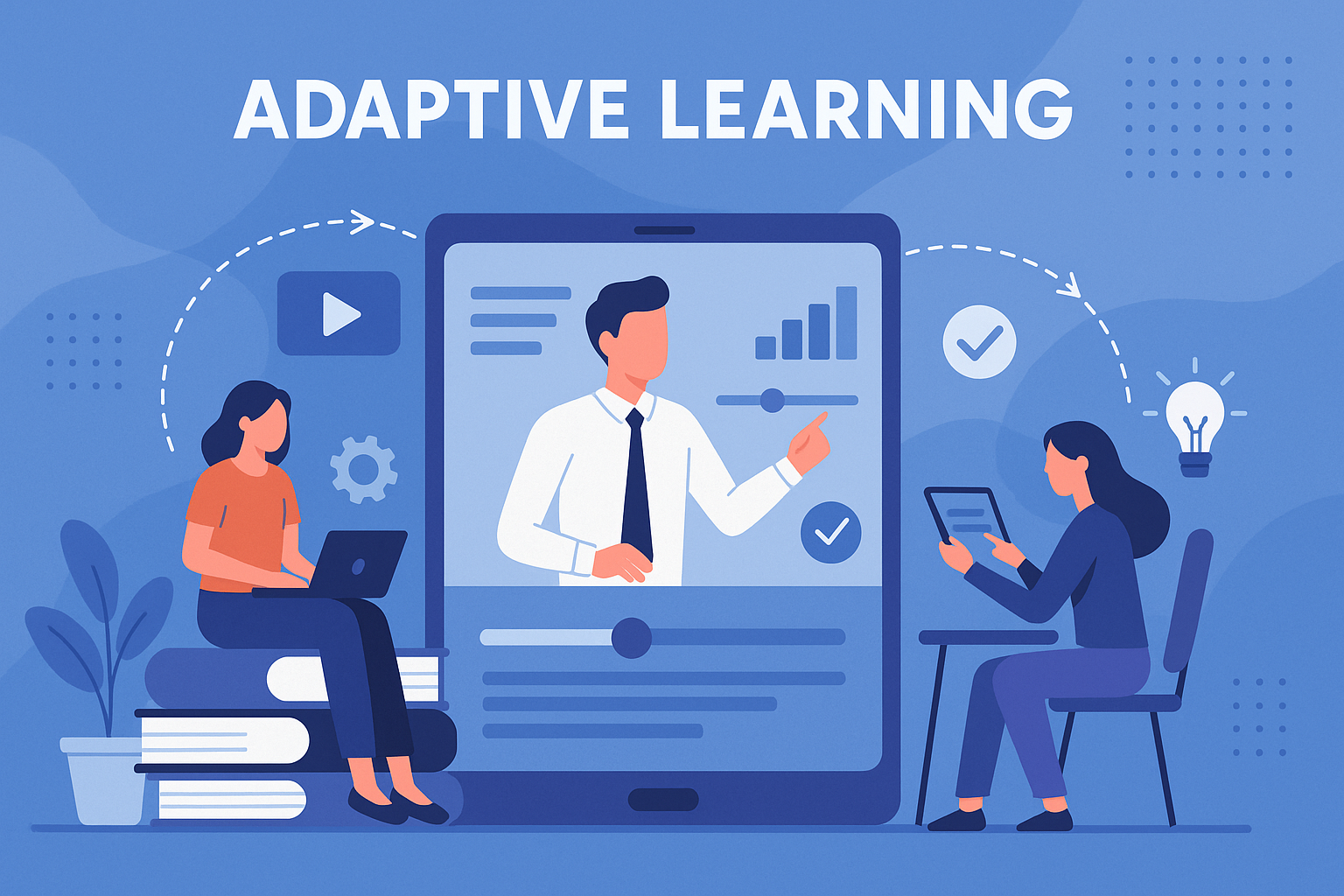
What Is Adaptive Learning?
Adaptive learning refers to training systems that adjust content delivery based on the learner’s performance, behavior, preferences, and progress. Unlike traditional fixed-course formats, adaptive platforms respond in real-time to each employee’s unique needs.
Adaptive learning systems personalize the pace, depth, and format of instruction using:
- Algorithms
- Assessments
- Data analysis
In corporate settings, this can mean smarter onboarding, more efficient compliance training, or personalized leadership development programs.
Josh Bicknell, a tutor at Learner, explains how emerging tools like AR and VR contribute to this adaptive ecosystem:
“For students struggling with traditional learning methods in schools or traditional classrooms, AR and VR may allow them to explore complex mathematical concepts through unique, 3D visualizations while practicing skills in a controlled virtual environment.”
While Bicknell speaks to educational settings, the concept applies directly to workplace learning, especially in technical fields where visualization, simulation, and hands-on practice can accelerate retention.
The Science Behind Adaptivity
Adaptive learning is grounded in continuous feedback loops. Learners interact with content while the system gathers real-time data. For reference, this data can include everything from quiz scores and click patterns to time spent on activities.
Based on that data, the system adjusts lesson difficulty, revisits core concepts, or introduces new material.
These capabilities are often embedded within corporate LMS platforms that use intelligent analytics to track employee progress across departments and roles.
A well-designed corporate LMS platform makes it easy for L&D teams to monitor training progress, spot knowledge gaps, and deliver targeted support where it’s needed most.
What Are Fixed-Content Courses?
Fixed-content courses deliver the same material to all learners, regardless of prior knowledge, learning speed, or background. These courses are typically pre-designed, linear, and consistent across users.
You’ll often see this format used for:
- Compliance training
- Certifications
- Safety protocols
- Standardized onboarding materials
Fixed-content courses offer a practical, low-barrier way to deliver structured learning experiences at scale, making them a popular choice for many corporate training systems.
Advantages of Fixed-Content Courses
Fixed-content courses continue to play a vital role in corporate training, especially when consistency is a top priority:
- Scalability: Content can be delivered to thousands of employees without additional configuration.
- Standardization: Ensures consistency across teams, departments, or global offices.
- Simplicity: Easy to build, maintain, and audit, making them ideal for regulatory training or policy rollouts.
For companies seeking efficient, repeatable training processes, fixed-content learning still offers a reliable solution.
Limitations in Modern Upskilling
Despite their advantages, fixed-content courses may not meet the evolving needs of today’s workforce:
- Lack of Personalization: Learners with different backgrounds are forced to go through the same material.
- Low Engagement: Repetitive or irrelevant content can lead to disengagement and completion fatigue.
- Rigid Structures: Content can become outdated quickly, and updates require complete revisions.
As organizations shift toward more agile skill development, these limitations have prompted a growing interest in adaptive learning systems.
Adaptive vs Fixed: Key Differences in Corporate Training
To understand which method works best, it’s helpful to compare adaptive and fixed-content learning across a few key dimensions:
| Criteria | Adaptive Learning | Fixed-Content Courses |
| Personalization | High – content adapts to the user | Low – content is the same for all |
| Engagement | Interactive, responsive | Passive, linear |
| Scalability | Moderate – requires intelligent design | High – easy to deploy |
| Compliance | Requires customization | Great for standardized topics |
| Data Insights | Real-time analytics and tracking | Static assessments |
You can explore how different corporate training software solutions support both adaptive and fixed-content models across various enterprise settings.
Performance Tracking and Analytics
One of the biggest advantages of adaptive learning is the ability to track employee engagement and comprehension in real time. Learners don’t just complete a module. They interact with it, and those interactions inform what comes next.
Fixed-content platforms, by contrast, often rely on outdated assessments (like end-of-course quizzes) to measure effectiveness. This makes it harder to intervene early when employees are struggling or disengaged.
Expert Insights on Business ROI and Employee Engagement
Corporate learning isn’t just about knowledge. It’s about ROI. And here, adaptive learning increasingly shows its value.
Adaptive systems reduce time-to-competency by focusing on what employees need to learn and skipping what they already know. This increases efficiency, improves retention, and decreases frustration.
How Adaptive Upskilling Enhances Engagement and Retention
Employees today want more than compliance checklists. They want learning experiences that feel relevant, empowering, and worth their time. Adaptive learning checks these boxes by aligning content to job roles, current skill levels, and career goals.
Many employers are also boosting engagement through education benefits like:
- Tuition reimbursement
- Professional development stipends
- Flexible learning time
These programs not only promote growth but reduce turnover.
To help employees afford upskilling opportunities, organizations may also refer them to platforms like the Scholarship Institute. This platform streamlines the process of connecting students with scholarship opportunities and offers a wide range of funding options.
Implementation Challenges and Considerations
Of course, no system is perfect. While adaptive learning is powerful, it comes with a learning curve. Pun intended.
- Cost: Developing personalized content requires greater investment upfront.
- Technical Integration: Not all legacy systems support intelligent adaptivity.
- Cultural Resistance: Employees and managers alike may be slow to adopt new models.
Successful implementation often comes down to selecting e-learning solutions that align with your company’s size, goals, and overall digital readiness.
Overcoming Cultural Resistance
Any major change, especially one tied to digital transformation, requires clear communication and leadership buy-in. Start by training team leads on the value of adaptive learning, and invite early adopters to test pilot programs.
Create feedback loops, reward progress, and measure success in terms of learner satisfaction and business outcomes. Not just completion rates.
Future of Corporate Upskilling: Hybrid Approaches
The best solution may not be a binary choice between adaptive and fixed-content learning, but a strategic blend of both.
- Use fixed-content courses for onboarding, compliance, and foundational knowledge.
- Layer in adaptive tools for skill building, technical training, and leadership development.
This hybrid approach maximizes flexibility, scalability, and personalization, ensuring your workforce is not just compliant but continuously capable.
Final Thoughts
There’s no one-size-fits-all answer when it comes to corporate upskilling. Adaptive learning offers dynamic, personalized experiences that improve engagement and ROI, but may require more setup and investment. Fixed-content courses are easy to scale and great for standardized topics, but can feel impersonal or outdated in fast-moving industries.
Ultimately, the best choice depends on your organization’s goals, workforce profile, and training needs.
Looking to future-proof your learning strategy? Consider a hybrid model that meets learners where they are while preparing them for what’s next.