
Why 2026 Is a Turning Point for SaaS
The SaaS industry is entering a more mature and demanding phase. By 2026, business software will no longer be judged primarily on feature count or interface polish. Teams are now prioritizing measurable outcomes, workflow efficiency, and long-term adaptability. This shift is driven by rapid advances in artificial intelligence, rising software costs, stricter compliance expectations, and the reality of distributed workforces becoming permanent rather than temporary.
Unlike earlier waves of SaaS growth, the next stage is defined by consolidation and intelligence. Organizations want fewer tools that do more, integrate better, and actively reduce decision fatigue. According to Statista, global spending on cloud services continues to grow at double-digit rates as companies invest in platforms that support automation and data-driven operations. As competition increases and budgets tighten, software choices in 2026 will be less experimental and far more strategic.
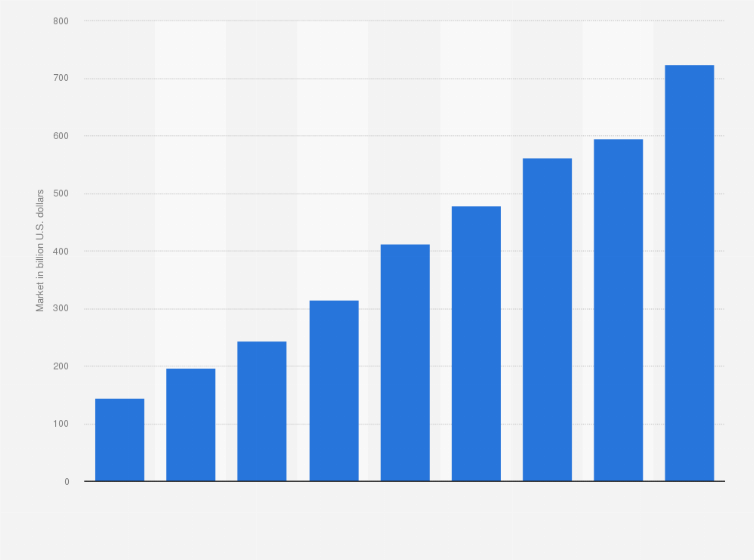
Source: Statista (Jan 2026)
Understanding the trends shaping this transition is essential for teams that want to stay competitive and scalable in the years ahead.
Content Integrity and AI Governance Become Business Requirements
As AI-generated content becomes a standard part of business workflows, maintaining content integrity is turning into a core requirement rather than a best practice. By 2026, teams are producing content at a scale that was previously impossible, spanning marketing copy, product documentation, customer support responses, and internal knowledge bases. Speed, however, is no longer the primary challenge. Quality, originality, and accountability are.
Organizations are increasingly aware that AI-assisted content introduces new risks alongside its benefits. Duplicate phrasing, unintentional plagiarism, and repetitive structures can damage search performance, weaken brand trust, and create compliance concerns, particularly in regulated industries. This is why AI governance is expanding beyond model selection to include oversight of the content those models generate.
This shift is already visible in enterprise adoption data. According to a PwC Responsible AI survey, more than 60 percent of organizations have embedded responsible AI principles directly into their operational strategy, citing transparency and accountability as critical success factors. Content governance is a central part of this approach, especially as AI-generated material increasingly reaches customers and the public.
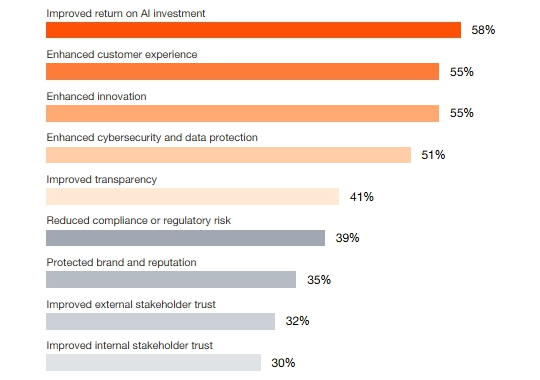
Source: PwC’s 2025 US Responsible AI Survey
For marketing and content teams, governance often starts with originality checks built into the workflow. Rather than reviewing content only at the final stage, teams are validating AI-assisted drafts early to avoid downstream issues. This is where tools such as a plagiarism remover fit naturally into modern SaaS stacks, helping teams identify content overlap and reduce the risk of publishing duplicated or low-quality material.
Smaller teams and early-stage organizations often take a lighter approach, relying on accessible options like a free plagiarism remover tool to review drafts during experimentation and iteration. These tools allow teams to move quickly while still maintaining a baseline level of content integrity as they scale AI usage across departments.
As AI-generated content becomes ubiquitous, businesses that treat content integrity as a software requirement rather than an afterthought will be better positioned to protect their brand, maintain search visibility, and scale responsibly through 2026 and beyond.
Vertical SaaS and Industry-Specific Solutions Take the Lead
As the SaaS market matures, businesses are moving away from one-size-fits-all platforms in favor of software designed for specific industries and use cases. By 2026, vertical SaaS solutions are becoming the default choice for teams that need deeper functionality, better compliance alignment, and faster time to value.
Generic tools often require heavy customization to fit industry workflows. In contrast, vertical SaaS products are built with domain knowledge baked in. This allows teams to adopt software that already understands their terminology, data structures, and regulatory constraints. Marketing teams, for example, increasingly rely on purpose-built platforms that support campaign analytics, attribution modeling, and customer segmentation without extensive setup. Many organizations use curated resources like CompareCamp’s overview of marketing software platforms to evaluate tools that align closely with their growth strategies.
The same pattern is emerging across ecommerce, finance, healthcare, and logistics. Vertical SaaS vendors are able to move faster because they solve narrower problems exceptionally well. This focus also allows them to integrate AI in more meaningful ways, such as industry-specific forecasting models or compliance-aware automation, rather than generic recommendations.
Market data supports this shift. According to Statista, the global vertical SaaS market is projected to grow steadily as businesses prioritize specialized solutions that reduce implementation time and operational friction. This growth reflects a broader buyer mindset change: software is no longer judged by how many features it offers, but by how precisely it solves real-world problems.
By 2026, teams evaluating new SaaS tools should expect industry alignment to be a baseline requirement. Choosing software that speaks the language of the business will be a key factor in improving adoption, efficiency, and long-term ROI.
Automation Shifts From Task Execution to Cognitive Load Reduction
Automation has been part of SaaS for years, but its role is changing rapidly. By 2026, the most valuable automation is not about completing isolated tasks faster. It is about reducing cognitive load for teams by helping them decide what matters, when to act, and where to focus.
Early automation focused on rule-based workflows such as triggering emails, moving records between systems, or scheduling reports. While useful, these systems often added complexity by creating more dashboards, alerts, and configurations to manage. Modern SaaS platforms are now using AI to filter noise, surface priorities, and guide decision-making in real time.
This evolution is driven by a growing awareness of decision fatigue in digital workplaces. As teams juggle more tools and data streams, productivity suffers when employees are overwhelmed by choices rather than supported by insights. According to Deloitte’s research on technology trends, organizations are increasingly investing in intelligent automation that simplifies decision paths and supports human judgment rather than replacing it.
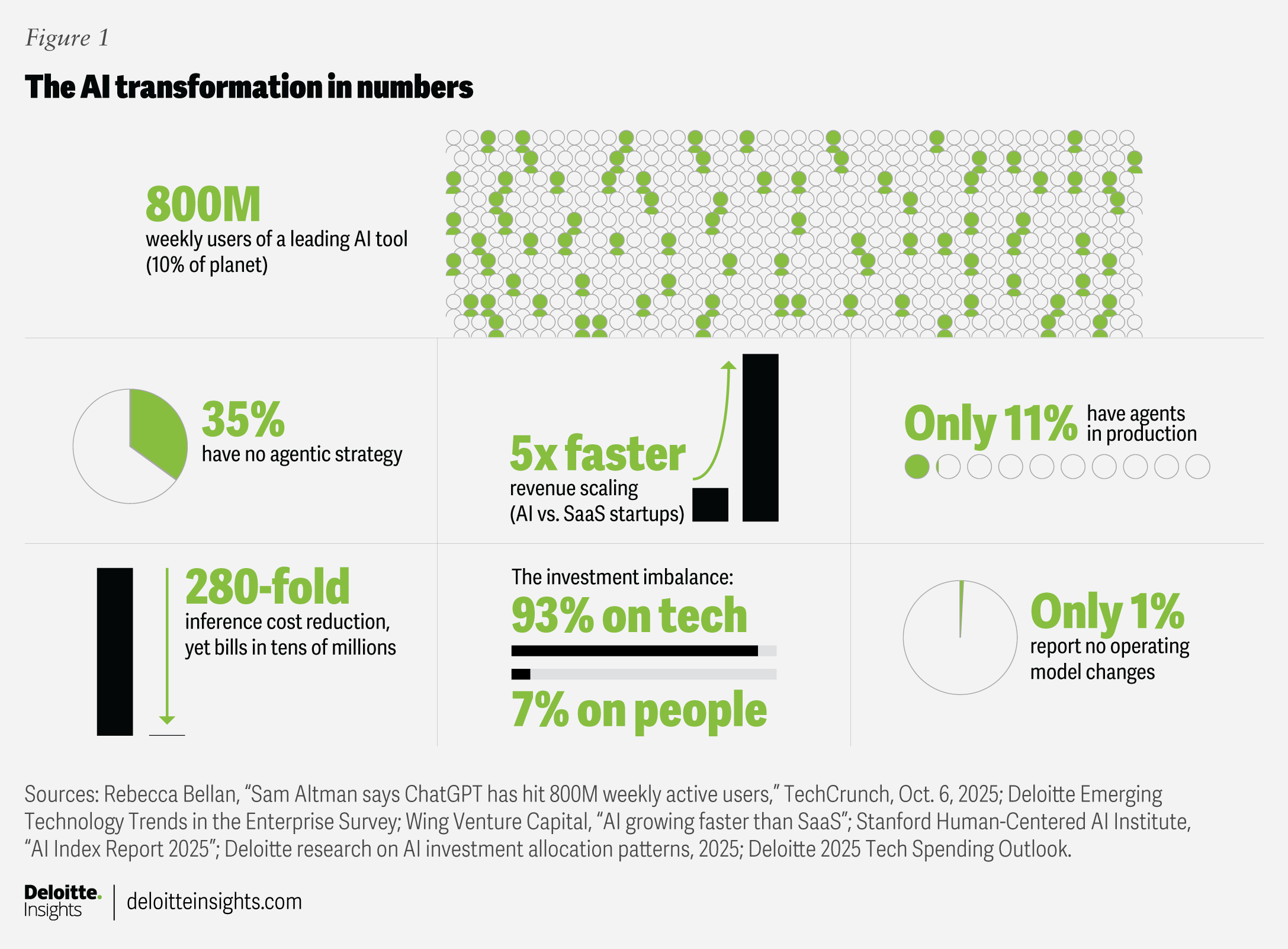
Source: Deloitte’s Tech Trends 2026 Survey
In practice, this means SaaS platforms that automatically highlight high-impact tasks, summarize complex information, and recommend next steps based on context. Instead of asking users to interpret raw data, modern tools are expected to present clear, actionable guidance. For example, sales software may prioritize leads based on behavior patterns, while project management tools may flag risks before deadlines slip.
Collaboration Becomes Async, AI-Assisted, and Outcome-Driven
Collaboration software is undergoing a fundamental shift as remote and hybrid work models become a permanent reality. By 2026, teams are moving away from real-time, meeting-heavy collaboration toward async workflows that prioritize clarity, documentation, and outcomes over constant availability.
The early phase of remote work focused on replicating office interactions through chat and video calls. While effective in the short term, this approach often led to notification overload and meeting fatigue. Modern SaaS platforms are now designed to support collaboration without requiring everyone to be online at the same time. This includes features such as AI-generated summaries, automated task updates, and shared workspaces that capture decisions and progress asynchronously.
AI plays a growing role in making async collaboration viable at scale. Instead of forcing teams to sift through long message threads or recorded meetings, AI-assisted tools can surface key takeaways, assign follow-ups, and maintain a clear record of work. As a result, collaboration becomes more about progress and accountability than constant communication. Many teams evaluate these capabilities through curated resources like CompareCamp’s overview of collaboration software to find platforms that support distributed workflows effectively.
This trend also reflects a broader cultural shift in how teams measure productivity. Success is increasingly defined by delivered outcomes rather than hours spent online or messages sent. SaaS tools that support this mindset help teams work across time zones, reduce burnout, and maintain momentum without sacrificing transparency.
SaaS Pricing Shifts From Seats to Usage and Value
Traditional per-seat pricing models are becoming less effective as SaaS usage patterns evolve. By 2026, more software vendors are moving toward pricing structures based on usage, outcomes, or delivered value rather than the number of users on an account. This change reflects how teams actually interact with modern software, especially as automation and AI reduce the need for constant human involvement.
In many AI-enabled platforms, a small number of users can trigger workflows that serve entire teams or customer bases. Charging purely by seats can feel disconnected from the real value the software provides. As a result, SaaS companies are experimenting with models tied to transactions, processed data, generated content, or performance metrics. This approach aligns pricing more closely with business impact, making costs easier to justify and scale.
Ecommerce platforms are a clear example of this shift. Many tools now price based on order volume, revenue thresholds, or feature usage rather than user count. Buyers often compare these models using resources such as CompareCamp’s directory of ecommerce software solutions to understand how different pricing structures map to growth stages and operational needs.
Industry forecasts support this direction. Gartner predicts that value-based and consumption-based pricing will continue to expand as SaaS vendors compete on transparency and flexibility. For buyers, this trend requires closer attention to usage patterns and contract terms, as costs may fluctuate based on activity rather than headcount.
By 2026, teams preparing their SaaS budgets should expect pricing conversations to focus less on licenses and more on measurable outcomes. Choosing software with pricing that scales predictably alongside business growth will be essential for long-term sustainability.
What Teams Should Prepare For in 2026
As these SaaS trends converge, one thing becomes clear: preparation matters more than prediction. Teams that succeed in 2026 will not necessarily be the ones using the newest tools, but the ones that have built adaptable systems, clear processes, and realistic expectations around software capabilities.
The first priority is auditing how AI is already being used across the organization. Many teams adopt AI features incrementally without a clear view of where automation adds value and where it introduces risk. Taking stock of AI-driven workflows, content generation, and decision support systems helps identify gaps in governance, quality control, and accountability.
Next, teams should evaluate whether their SaaS stack reduces complexity or adds to it. Tools that promise efficiency but increase cognitive load through excessive dashboards, alerts, or manual configuration often slow teams down over time. In 2026, the most effective software will simplify decisions, surface priorities, and integrate smoothly across departments.
Finally, preparation means choosing platforms that can evolve. Pricing models, collaboration styles, and industry requirements are changing quickly. Teams should favor SaaS vendors that offer flexible pricing, strong integration ecosystems, and a clear roadmap aligned with how work is actually done.
By focusing on adaptability, governance, and real-world usability, teams can position themselves to take advantage of SaaS innovation rather than constantly reacting to it.
Building a Smarter SaaS Stack for the Next Era
The SaaS landscape heading into 2026 is defined less by rapid experimentation and more by intentional design. Business software is expected to think smarter, integrate deeper into daily workflows, and deliver measurable value without adding unnecessary complexity. AI is no longer a differentiator on its own. How it is governed, applied, and aligned with real business outcomes is what sets modern platforms apart.
For teams, this means shifting focus from collecting tools to building systems. Vertical alignment, intelligent automation, async collaboration, and flexible pricing models are all signals of a market that is maturing around how work actually happens. Software decisions are becoming longer-term commitments that shape productivity, culture, and scalability.
Organizations that prepare early by auditing their SaaS stack, strengthening governance practices, and prioritizing tools that reduce friction will be better equipped to navigate this next phase. As 2026 approaches, the most successful teams will not chase trends blindly. They will choose software that evolves with them and supports sustainable growth in an increasingly intelligent digital workplace.