
The vehicle rental industry is at a critical inflection point. According to Research and Markets, the global vehicle subscription services market is projected to grow from approximately USD 4.8 billion in 2024 to over USD 22 billion by 2035, reflecting a compound annual growth rate of around 13.6 percent. This rapid growth highlights a clear shift toward long-term, subscription-based and flexible vehicle access models, driven by changing consumer expectations and increasing cost pressures across the mobility sector.
For decades, growth was driven by short-term, daily or hourly rentals designed primarily for travel and occasional use. That model still exists, but it no longer reflects how customers want to access vehicles today or how rental businesses need to operate to remain profitable.
Customers now expect flexibility, predictable pricing and digital-first experiences. At the same time, rental operators face rising vehicle costs, lower margins, fleet utilisation challenges and increasing competition from new mobility providers. Subscription and flexible rental models have emerged as a direct response to these pressures.
However, these models are not enabled by pricing alone. They require a fundamentally different operational backbone. This article explains why subscription and flexible rentals are gaining traction, why traditional rental systems fail to support them and how cloud-based vehicle rental software makes these models scalable, profitable and sustainable heading into 2026 and beyond.
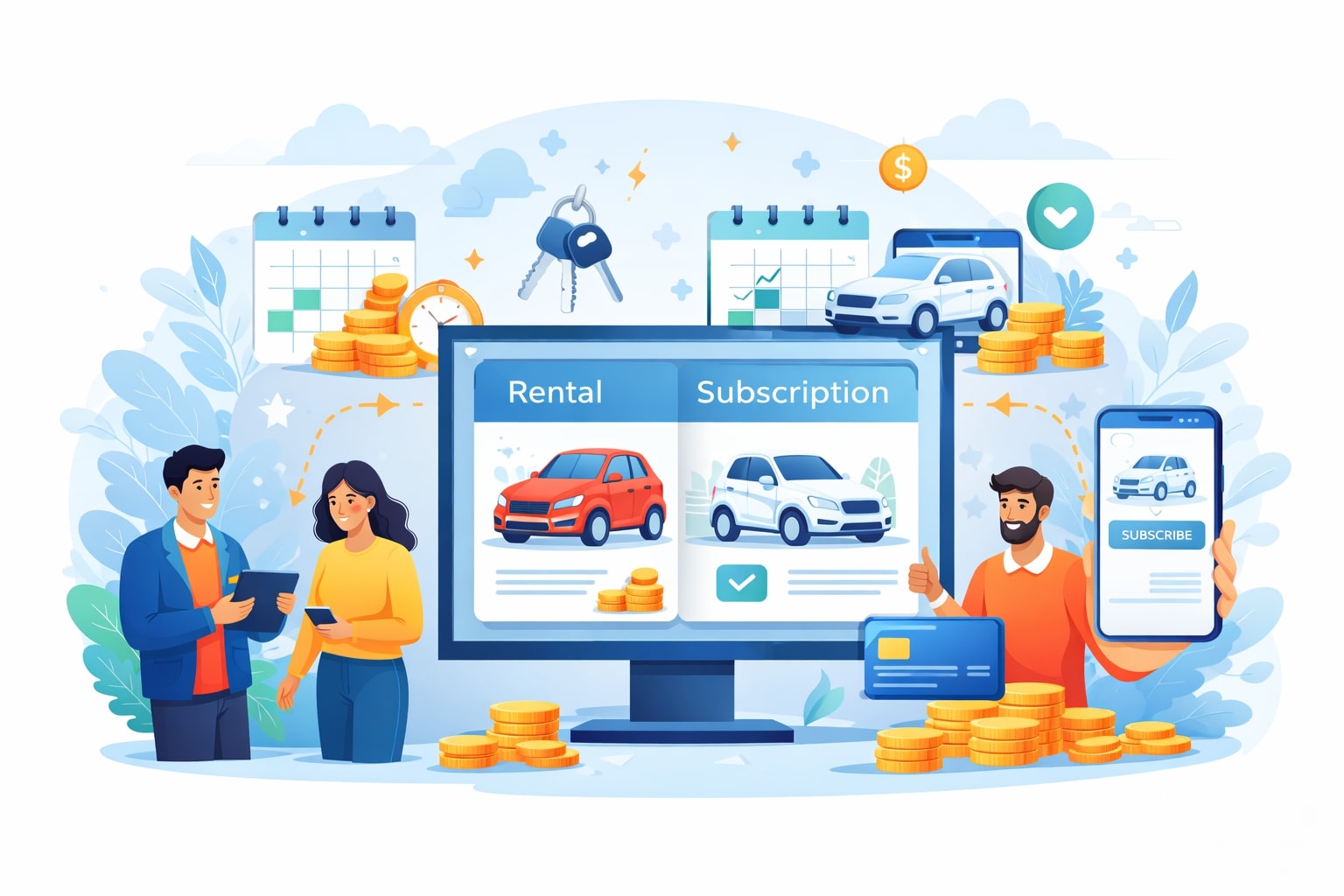
The Shift Toward Subscription and Flexible Mobility: Key Market Drivers
Traditional, transaction-based rental models are no longer the only option available to customers. Today, consumers increasingly prefer flexible alternatives such as monthly subscriptions, long-term rentals and usage-based access. This shift is driven by several key factors, including changing mobility preferences, the desire for predictable costs and the growing demand for convenience and flexibility.
- Changing consumer preferences: Modern customers, especially younger demographics, value flexibility over ownership or long commitments.
- Cost transparency: Subscription and flexible models often bundle services like maintenance and insurance, simplifying the user experience.
- Mobility trends: Urbanisation and multi-modal transport needs have increased demand for on-demand vehicle access.
A recent report on the vehicle rental software market highlights that subscription and flexible usage models are key drivers of growth and innovation across the industry. Modern software integrates these models directly into the platform, enabling businesses to diversify their offerings and increase revenue streams.
Why Legacy Systems Fall Short
Traditional vehicle rental systems were designed for fixed-term, short-duration bookings with manual scheduling and billing processes. They often lack the flexibility to handle complex billing cycles, recurring revenue streams, or dynamic vehicle allocation required by subscription services.
Moreover, legacy systems usually:
- Require manual updates for contracts and pricing
- Don’t support multi-tiered rental plans
- Struggle with recurring payments or automated billing
- Lack advanced customer profiling and CRM
Without these capabilities, it becomes nearly impossible to deliver modern subscription-based services or flexible rental options that today’s market expects.
What Subscription & Flexible Rental Models Look Like in Practice
Subscription mobility is often discussed broadly, but in reality, it consists of several clearly defined and monetisable models.
Monthly or Long-Term Vehicle Subscriptions
Customers pay a fixed monthly fee for access to a vehicle without ownership. Contracts are ongoing, cancellable and renewable, similar to SaaS subscriptions.
Operational requirement: Active contract management, automated renewals, recurring billing and proration.
Tiered Subscription Plans
Different plans offer varying vehicle categories, mileage limits and service levels.
Operational requirement: Rule-based pricing, entitlement tracking, automated upgrades and downgrades.
Hybrid Flexible Rentals
Traditional rentals extended into weeks or months with dynamic pricing and rollover benefits.
Operational requirement: Flexible booking logic and seamless transition between rental and subscription states.
Usage-Based Access
Pricing is based on time, mileage or utilisation rather than fixed duration.
Operational requirement: Real-time usage tracking, metered billing and transparent reporting.
Each model introduces operational complexity, from billing and contract management to fleet allocation, that cannot be handled manually or supported by traditional rental systems at scale.
How SaaS cloud-based Vehicle Rental Software Enables Subscription & Flexible Mobility Models
Modern vehicle rental software functions as a centralised SaaS-based platform that connects pricing, billing, fleet operations and customer lifecycle management. Unlike legacy systems built for one-off bookings, these platforms are designed to support ongoing access, variable usage and recurring revenue, the foundation of subscription, hybrid and flexible mobility models.
Below are the core capabilities that make subscription and flexible mobility commercially viable at scale, along with why each one matters from a business and customer perspective.
1. Automated Subscription Billing & Revenue Control
Subscription and flexible rental models rely on recurring and usage-based charges rather than fixed, one-time payments. Modern platforms support automated subscription cycles, prorated charges, mid-cycle plan changes, usage-based fees and invoice generation without manual intervention.
Why this matters:
Accurate automation eliminates revenue leakage, reduces billing disputes and creates predictable cash flow. Without this capability, flexible mobility models quickly become operationally unmanageable.
2. Contract-Centric Customer Lifecycle Management
Flexible mobility is built on ongoing customer relationships, not individual bookings. A new-age vehicle rental system manages active contracts, renewals, pauses, upgrades, downgrades and cancellations in real time while maintaining a complete customer history.
Why this matters:
This enables retention strategies, personalised offers and long-term customer value optimisation, outcomes that transaction-based rental systems cannot support.
3. Multi-Tier Pricing & Package Configuration
New-age platforms allow rental operators to configure tiered subscription plans, mileage limits, service bundles and hybrid pricing rules within a single system. These packages can be tailored for individuals, corporate clients or long-term users.
Why this matters:
Businesses can monetise different customer segments without adding operational complexity or manual oversight. In fact, according to Market Research Intellect, flexible pricing models supported by digital platforms are becoming one of the key growth drivers in the vehicle rental industry.
4. Real-Time Fleet Visibility & Vehicle Swapping
A defining feature of flexible mobility is the ability to change vehicles based on evolving needs. Rental software provides real-time fleet visibility, enables digital swap requests and automatically adjusts contracts, pricing and billing based on usage.
Why this matters:
Operators maximise fleet utilisation while customers experience genuine flexibility, a key differentiator over traditional rentals.
5. Integrated Payments & Billing Transparency
Subscription and flexible models require frictionless, recurring payments. Modern software integrates with multiple payment gateways, supports automated retries, handles prorated adjustments and provides customers with clear billing visibility.
Why this matters:
Payment transparency reduces churn, builds trust and improves the overall customer experience in long-term rental relationships.
6. Data, Usage Analytics & Decision Intelligence
Advanced vehicle rental platforms capture detailed data on utilisation, plan performance, churn and customer behaviour across subscription and flexible rental models.
Why this matters:
These insights allow businesses to refine pricing, forecast demand, optimise fleet allocation and continuously improve the profitability of flexible mobility offerings.
Business Impact of Subscription and Flexibility‑Ready Software
Rental operators using software designed for subscription, hybrid and flexible rental models gain tangible, compounding advantages:
- Predictable recurring revenue from subscriptions, long‑term rentals and usage‑based plans
- Higher customer lifetime value driven by ongoing contracts rather than one‑off bookings
- Improved fleet utilisation through flexible allocation, vehicle swaps and longer usage periods
- Reduced manual operations via automated billing, contracts and fleet workflows
- Faster launch of new mobility models without rebuilding systems or processes
These outcomes are difficult and often impossible to achieve with traditional rental systems built around fixed-term, transaction-based bookings.
Customer Value Delivered by Subscription & Flexible Mobility
From the customer’s perspective, modern mobility models deliver practical, everyday value:
- No long‑term ownership burden or rigid lease commitments
- Flexible vehicle access that adapts to changing lifestyle or business needs
- Transparent, predictable pricing across subscriptions, long‑term and hybrid rentals
- Digital‑first management of vehicles, plans and payments
- Freedom to upgrade, downgrade or swap vehicles as needs evolve
Together, these benefits reflect a shift from rigid rentals to mobility that adapts to how customers actually live and work.
Why Subscription & Flexible Mobility Will Continue to Grow
The continued growth of flexible mobility is supported by several long‑term structural trends:
- Urbanisation and declining car ownership, making access more attractive than ownership
- Expansion of the subscription economy, shaping expectations across industries
- Rapid innovation in SaaS and cloud platforms, enabling scalable, automated mobility services
Together, these forces ensure that subscription, hybrid and flexible vehicle access will move from alternative options to standard customer expectations.
Conclusion
Subscription and flexible rental models are becoming core strategies for modern mobility businesses. Success, however, depends entirely on the software foundation supporting them.
A Modern vehicle rental solution enables these models by automating billing, managing ongoing contracts, optimising fleet usage and delivering actionable insights. Businesses that adopt subscription-ready platforms gain operational efficiency, strategic agility and sustainable growth.
As mobility continues to move toward access over ownership, the companies that win will be those that treat vehicle rental software not as a booking tool, but as their mobility operating system.