
In the modern digital workplace, the line between conversation and action has blurred. A discussion in a chat application like Slack or Microsoft Teams often leads directly to the creation of a task, the assignment of a project, or the sharing of a sensitive document. This “chat-to-task” workflow has become the backbone of productivity, enabling teams to move from idea to execution at unprecedented speed. However, this seamless flow has created a critical security blind spot. Traditional security paradigms focus on protecting data at rest—securing the database, encrypting the file, or locking down the network. While these measures remain essential, they are insufficient. They fail to account for the *entire* workflow, which is now a living, dynamic process spanning multiple applications and platforms. True security requires protecting not just the data, but every step of the conversation and the actions it triggers.
This article will explore the security implications of chat-based workflows, the hidden risks in task management, and the strategies necessary to secure the full lifecycle of work, from the initial chat message to task completion. We will move beyond traditional data security and outline a comprehensive approach for businesses to secure their most critical workflows.
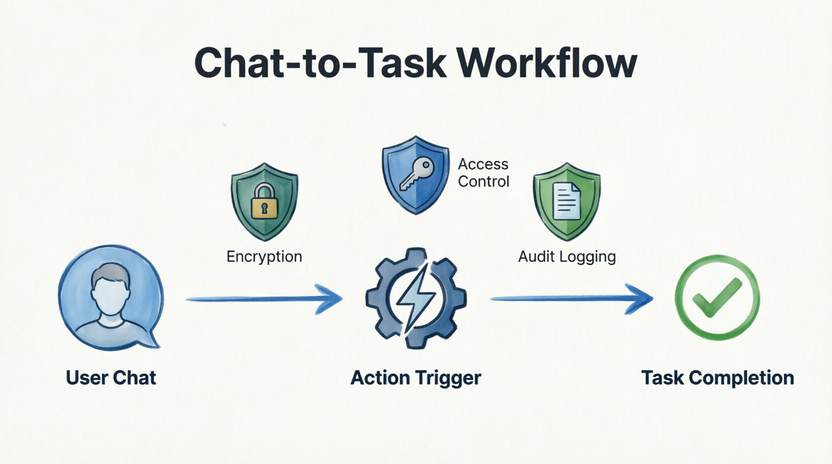
What are the security risks of chat-based workflows?
Chat-based workflows introduce a unique set of security risks that extend far beyond the traditional concerns of a messaging app. When a chat becomes the catalyst for business-critical actions, it transforms from a communication tool into a de facto operating system for your team’s work. The primary risks stem from this new dual nature.
The most significant risk is data leakage through context. A project manager might paste a customer’s sensitive information into a chat to assign a task to a developer. Even if the chat platform is encrypted, the sensitive data has now traveled to a new context—the developer’s task list. If the task management tool doesn’t have the same granular permissions as the chat, the data’s security posture is instantly compromised. Furthermore, the speed of chat encourages informal, less-considered sharing of information, increasing the likelihood of accidental data exposure.
Another critical risk is the loss of a comprehensive audit trail. When a task is born from a chat, the conversation itself is often the source of truth for requirements, deadlines, and approvals. If this conversation is not securely linked to the task, a vital part of the audit trail is lost. This makes it difficult to track who initiated an action, why it was initiated, and who approved it, creating compliance nightmares.
Finally, chat-based workflows often lead to “Shadow IT.” Users, finding formal processes too slow, will create workarounds using chat apps to discuss and assign tasks, completely bypassing approved, secure systems. This creates entire workflows that exist outside the visibility and control of IT and security teams, leaving the organization vulnerable to data breaches and insider threats.
How can you secure data in transit and at rest within chat applications?
Securing the data within your chat applications is the foundational layer of any chat-to-task security strategy. Without this base, securing the workflow is impossible. Fortunately, this is a well-understood problem with established best practices.
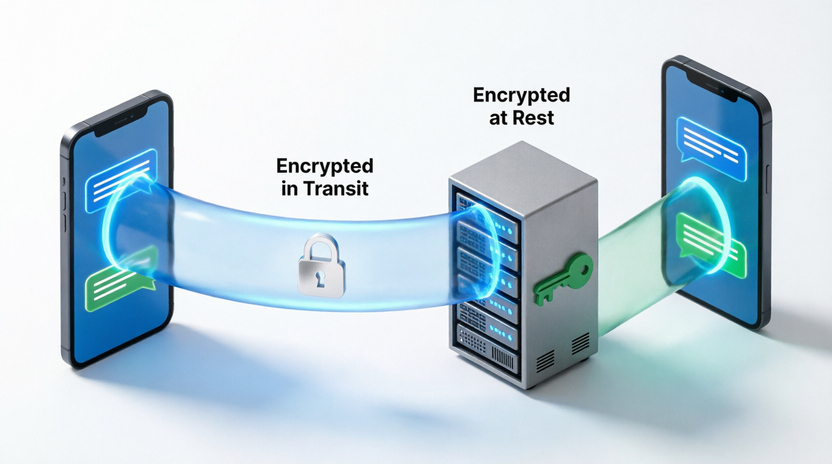
To secure chat data, you need end-to-end encryption (E2EE) for in-transit messages and strong encryption at rest for stored chats. You must also implement role-based access control (RBAC) to limit who can view sensitive conversations, ensuring that only authorized personnel have access to sensitive discussions.
- End-to-End Encryption (E2EE): This ensures that messages are encrypted on the sender’s device and can only be decrypted by the intended recipient’s device. Even if the service provider’s servers are compromised, the content of the messages remains secure. This is non-negotiable for protecting sensitive business discussions. Platforms that natively integrate both chat and task management, such as remote.team, are leading the way by offering this level of protection across the entire communication spectrum, ensuring that the conversations driving your work are private by default.
- Encryption at Rest: Data stored on servers (both yours and the vendor’s) must also be encrypted. This protects against data breaches where attackers gain access to the underlying storage systems. Look for platforms that use AES-256 encryption or stronger.
- Role-Based Access Control (RBAC): Not everyone in the company needs to see every conversation. Implement RBAC to define who can access which channels and private messages. This principle of least privilege is a cornerstone of data security.
- Message Retention and Deletion Policies: Configure automated policies for retaining and, crucially, deleting messages. Storing old messages indefinitely increases the attack surface. Clear policies for data lifecycle management reduce risk and aid in compliance with regulations like GDPR and CCPA.
For businesses evaluating secure communication tools, resources like CompareCamp’s reviews of secure messaging apps can provide valuable comparisons of features that align with these security requirements.
Why is task management security often overlooked in business communication?
Task management security is often overlooked because it’s seen as a productivity tool, not a data repository. However, tasks contain sensitive information, deadlines, and assignee details that, if compromised, can disrupt operations and reveal strategic plans. This perception gap is a critical vulnerability.
The oversight often stems from a “productivity-first” mindset. Task management platforms are chosen for their ease of use, speed, and feature set, with security often being an afterthought. Teams are more focused on getting things done than on the security posture of their to-do lists. The interface is often cluttered with checkboxes, tags, and due dates, which can mask the fact that the platform is housing confidential project data, client information, and internal strategic discussions.
Furthermore, the nature of task data can be deceptive. At first glance, a task like “Update website for client X” seems innocuous. However, it reveals a client relationship, an ongoing project, and potentially internal timelines. Aggregated across hundreds or thousands of tasks, this metadata can paint a detailed picture of a company’s operations, partnerships, and future plans, making it a goldmine for corporate espionage or a competitor.
The integration issue also plays a role. Task management tools are rarely standalone; they are connected to chat apps, file storage systems, and CRMs. The security of the task platform becomes the security of the entire integrated workflow. A weak link in the task management system can expose data across all connected applications. For example, if an integrated chat bot automatically creates a task from a message and exposes it to the wrong project board, the data has leaked, even if the original chat was secure.
What are the best practices for securing the entire workflow from chat to task?
Securing the entire workflow requires moving from a point-solution mindset to a holistic, process-oriented approach. It’s about securing the journey of data and intent from the first spark of an idea in a chat to its final realization as a completed task. This integration of security throughout the lifecycle is paramount.
Best practices include integrating secure chat with a compliant task manager, using automated workflows with predefined security rules, and maintaining a comprehensive audit log for every action taken, from message to task completion. This approach transforms security from a barrier into a seamless, invisible layer that enables, rather than hinders, productivity.
- Secure and Authorized Integrations: Ensure the connection between your chat platform and task management tool is built on authenticated, encrypted APIs (e.g., using OAuth 2.0). However, the most robust approach to minimizing risk is to eliminate the need for third-party integrations altogether by utilizing a unified platform. Solutions like remote.team combine chat and task management natively, ensuring that data stays within a single, secure environment without the vulnerabilities often introduced by connecting disparate apps. Avoid brittle and insecure methods like “copy-pasting” or using unauthorized third-party bots that could be harvesting data. If you do use separate tools, the integration itself must be a vetted and approved part of your technology stack.
- Automated Security Controls for Workflows: Leverage automation to embed security into the workflow. For example, set up rules so that any task created from a chat tagged as “Confidential” is automatically assigned a specific access level, placed in a secure project, and flagged for review. This offloads security decisions from users to the system, reducing human error.
- Granular Permissions Throughout the Chain: Permissions must flow from the chat to the task. If a user is not permitted to see a specific chat channel, they should not be automatically granted access to the tasks derived from it. Consistent RBAC across both systems is crucial. A leading analyst firm like Gartner emphasizes the importance of consistent security policies across integrated platforms.
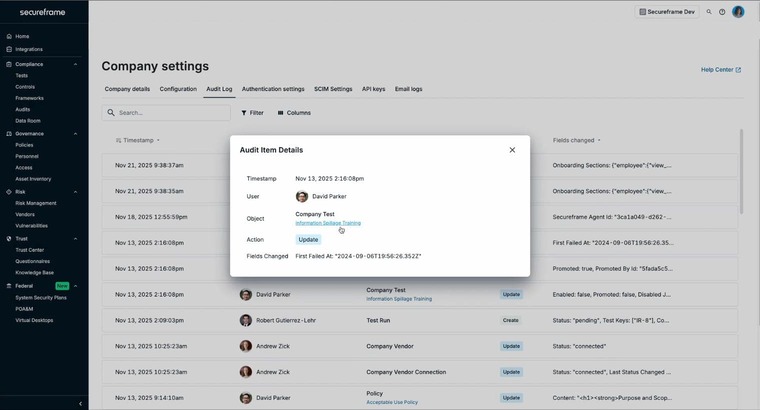
- End-to-End Audit Trails: The goal is a complete, immutable record. Every action—message sent, task created, comment added, file attached, task completed—must be logged with timestamps and user identities. This creates a forensic trail that is indispensable for compliance, troubleshooting, and security investigations. This trail should be accessible from a central dashboard for security teams.
- User Awareness and Training: Even the best technical controls can be undone by a careless user. Train employees not just on “don’t click phishing links,” but on the specific security implications of the chat-to-task workflow. Educate them on what information is appropriate to share, how to properly assign tasks, and how to recognize if something seems off in the automated process.
| Aspect | Data-Centric Security | Workflow-Centric Security |
| Primary Focus | Protecting the static information (files, messages). | Protecting the entire process and its outcomes. |
| Scope | Limited to individual data points or repositories. | Spans across multiple applications and interactions. |
| Key Metric | Data confidentiality and integrity. | Process reliability, auditability, and compliance. |
| Mindset | Secure the vault | Secure the journey |
| Failure Mode | Data is stolen or leaked. | Process is hijacked, tasks are misdirected |
How can AI and automation tools be integrated securely into chat and task workflows?
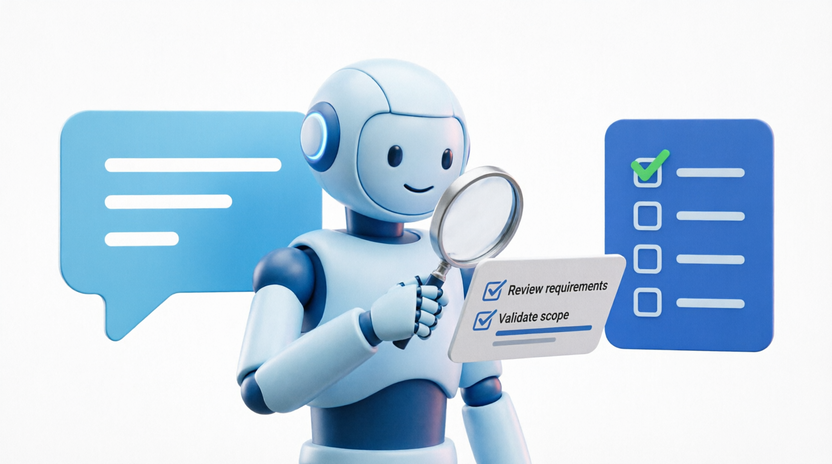
Integrating AI and automation securely requires using pre-approved, vetted tools that operate within a secure environment. You must define clear scope limitations for AI agents, ensure they cannot access data outside their designated tasks, and regularly audit their actions for anomalies. This represents the next frontier in workflow security.
The promise of AI in this context is immense. Imagine an AI agent that can not only interpret a chat message but also autonomously create a task, assign it based on team workload, attach relevant files, and set a deadline. However, this power introduces new risks. An AI agent with overly broad permissions could accidentally expose sensitive data, assign the wrong task, or even be manipulated by a malicious actor to disrupt operations.
To mitigate these risks, a “principle of least privilege” must be applied to AI agents. They should only have access to the specific data and permissions required to perform their defined function. For instance, an AI designed to create tasks should not have the permissions to delete tasks or access unrelated project files. Additionally, all AI actions should be logged and reviewable. A human-in-the-loop approach is wise for sensitive actions; for example, an AI could suggest a task assignment, but a human manager would need to approve it before it’s finalized.
According to NIST’s guidelines on AI security, maintaining transparency and accountability in AI systems is a foundational principle. Regularly auditing your AI’s decision-making process and its outputs is critical to ensure it’s operating within defined security boundaries and not inadvertently introducing vulnerabilities. Tools that facilitate this kind of secure AI integration are becoming increasingly important. Our guide on securing AI-powered business workflows provides a deeper dive into this emerging topic.
What are the key features to look for in a secure workflow management platform?
Look for platforms with built-in compliance certifications (SOC 2, ISO 27001), granular permissions, detailed audit logs, secure API connections for chat integrations, and robust data loss prevention (DLP) capabilities that span across chat and task modules. Selecting the right platform is the single most important step in executing a secure chat-to-task strategy.
Not all platforms are created equal. When evaluating a solution, you must look beyond the feature set and scrutinize its security architecture and certifications. These certifications, like SOC 2 Type II and ISO 27001, are not just badges of honor; they provide third-party validation that the vendor has implemented rigorous security controls and processes.
Key features to prioritize include:
- Granular, Role-Based Permissions: The ability to control access at a very fine level is essential. You need to be able to define who can view, edit, comment on, and complete tasks and projects. CompareCamp’s comparison of top project management software is an excellent resource to compare the permission models of leading platforms.
- Comprehensive Audit Logging: As discussed, a robust audit trail is non-negotiable. Ensure the platform logs every user action, API call, and system event, and that this log is exportable and tamper-proof.
- Secure, Validated Integrations: Investigate how the platform connects with your other tools, particularly chat applications. Do they use secure APIs? Have the integrations been security-tested?
- Data Loss Prevention (DLP): A modern platform should have built-in DLP capabilities that can scan for and block the sharing of sensitive data like credit card numbers or confidential documents across the entire workflow, from chat to task.
- Configurable Data Retention Policies: The ability to define and enforce policies for how long data is kept and how it is disposed of is crucial for both security and compliance.
Conclusion
The modern workplace is defined by the fluid movement from conversation to action. The security models of the past, focused on protecting static data in silos, are no longer adequate. The future of business security lies in securing the entire workflow—the dynamic, interconnected journey from a chat message to a completed task. By understanding the risks, implementing best practices for integration and automation, and choosing platforms with security at their core, businesses can not only mitigate threats but also empower their teams to work with confidence and speed. Security is no longer about locking things down; it’s about creating a trusted, protected environment where work can flow seamlessly and securely. This shift from data-centric to workflow-centric security is not just an upgrade; it’s a fundamental necessity for the digital age.